Channel Strips

Smear Guitar Strip

€14.90$16.90£12.90

Inside the strip

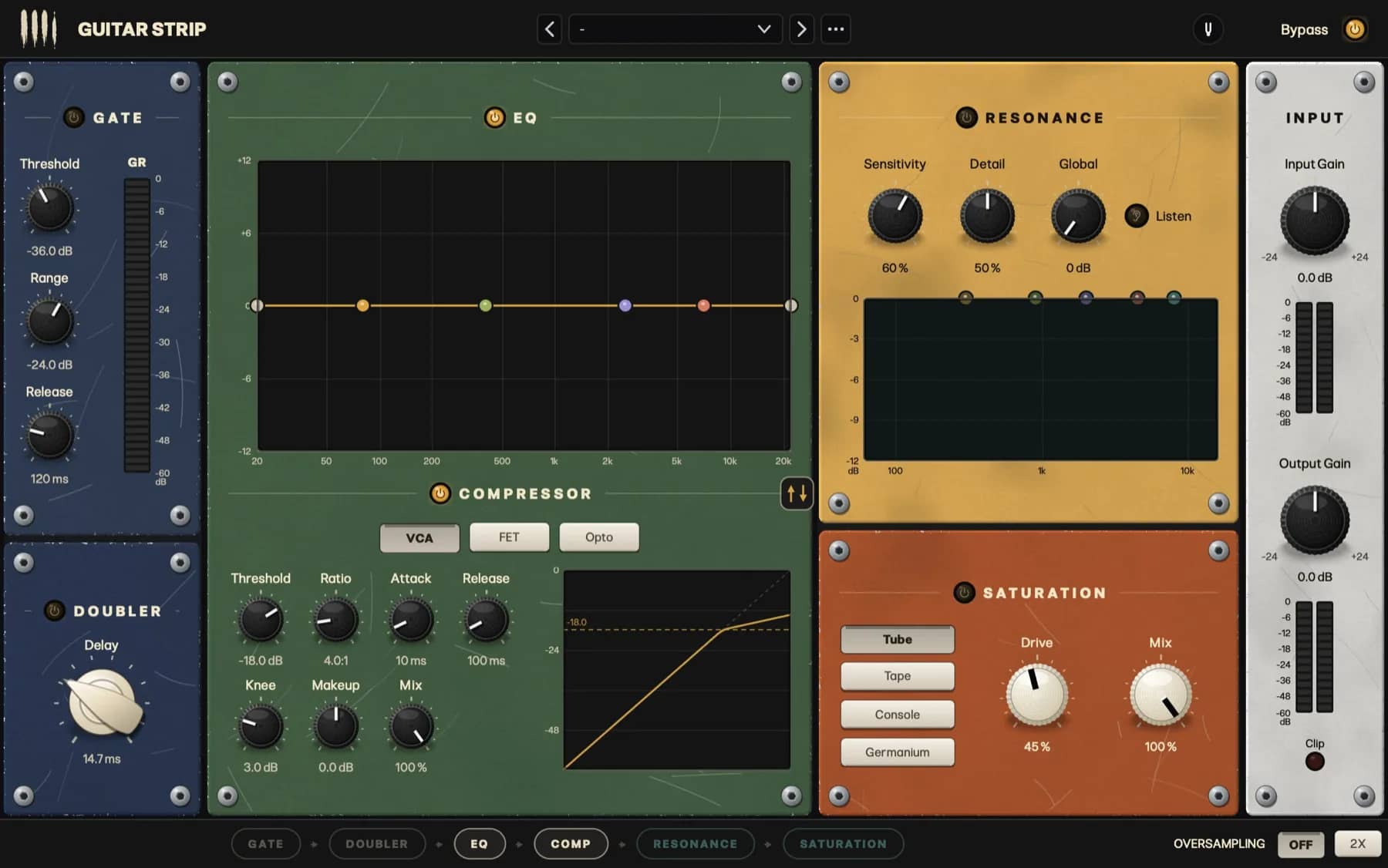
One window. The whole guitar chain.

Guitar Strip is a DAW channel strip voiced for guitar — DI, post-amp-sim, miked cab, clean to high-gain, and acoustic. Every module and its essential controls sit in a single left-to-right view: no advanced panels, no automatic gain compensation, no reordering beyond one deliberate swap. Analog-voiced tools throughout, plus one unmistakably digital signature: the Resonance Suppressor.

Gate

Gate

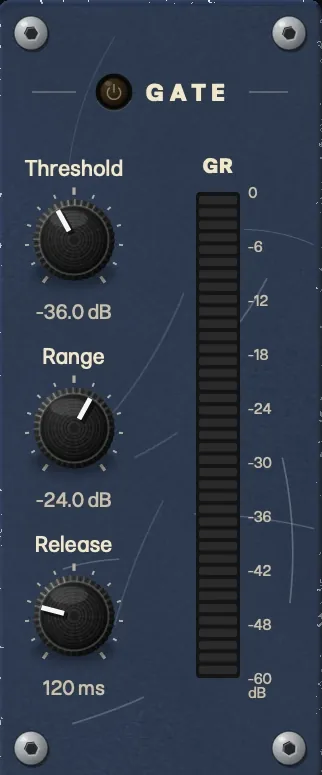
A noise gate that doubles as a gentle expander via Range, sitting first so it reacts to your raw pick attack, not a processed tail.

  • Three knobs, no menus

    Threshold, Range and Release with a gain-reduction meter and per-module bypass. Range turns a hard gate into a softer downward expander for tails you want to keep.

  • Musical, not clinical

    Fast attack, chatter-preventing hysteresis and program-appropriate hold keep it from stuttering on sustained notes.
Doubler

Doubler

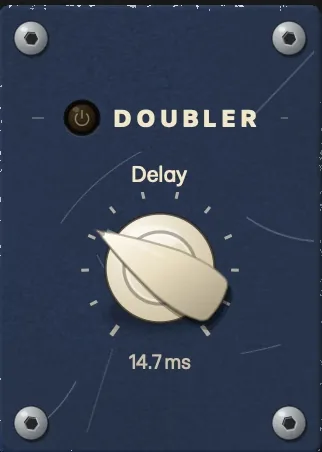
A one-knob widener that turns a mono guitar into a balanced stereo image, placed after the gate so the gate never triggers on the doubled tail.

  • Mono-safe by design

    Not a dry-left / delayed-right trick; a balanced two-voice structure that avoids pulling the image to one side or comb-filtering when your mix collapses to mono.

  • Just Delay

    A single Delay control in a short doubling/Haas range. No detune, no modulation, no separate width or mix to fuss with.

Character EQ

Character EQ

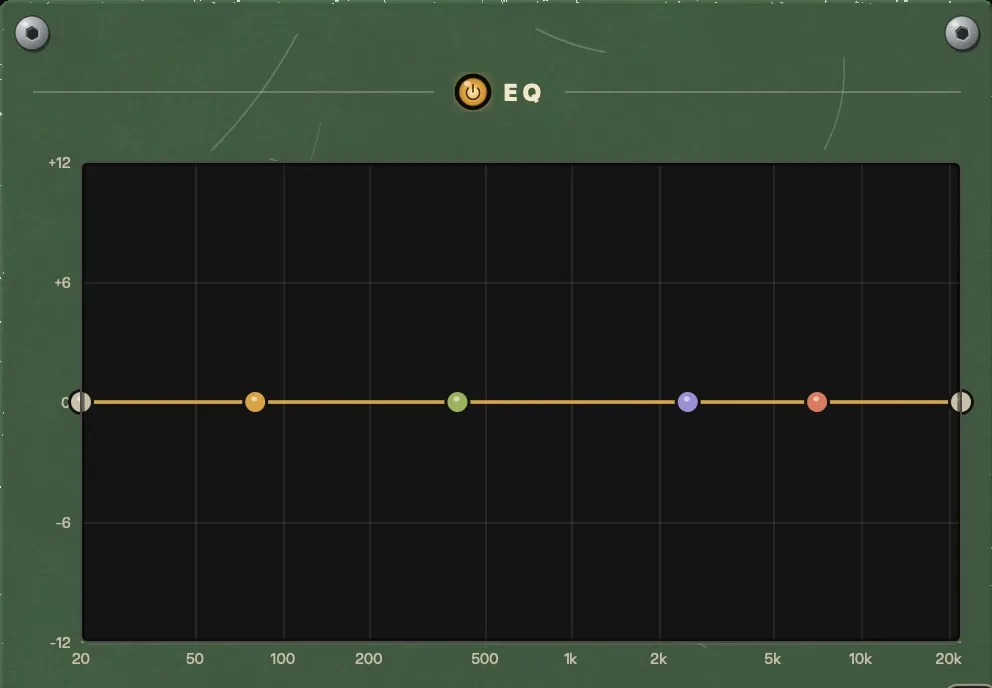
A Pultec-flavoured character EQ, not a surgical analyser — fast, musical tone-shaping across seven overlapping bands.

  • Seven voiced bands

    HPF, Weight, Body, Mids, Presence, Top and LPF. Weight and Top offer simultaneous Pultec-style Boost and Attenuation; Body/Mids/Presence add Broad/Tight bell shapes.

  • Guided, calm interface

    Soft magnetic detents on character frequencies, tooltips that describe the tone at each frequency, a non-interactive response curve, and a Guitar Tone Map Reference (rumble to thump to weight to air).

Compressor

Compressor

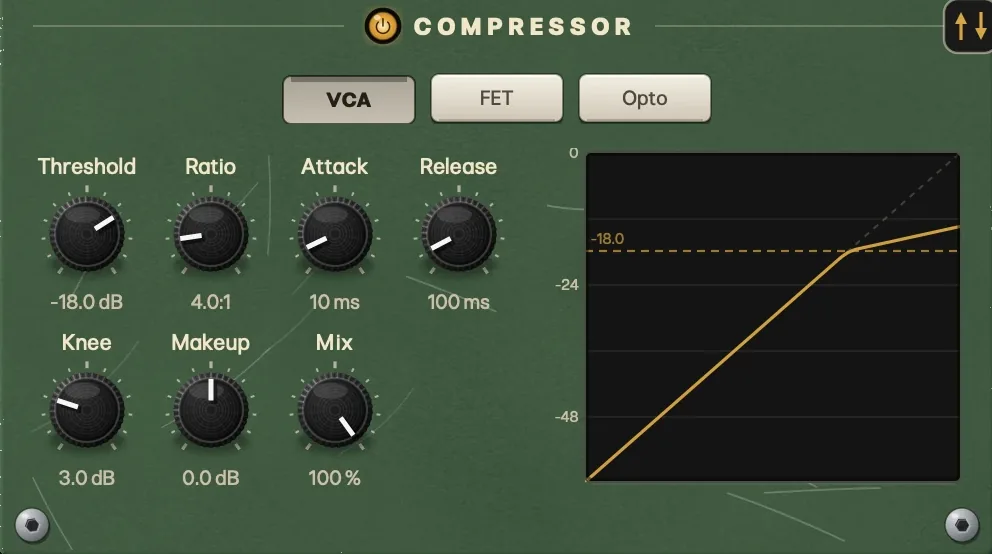
One compressor, three genuinely different circuits — switching model changes the visible controls and the feel.

  • VCA / FET / Opto

    Clean/VCA (precise, controlled), FET (fast, punchy, aggressive with a stepped ratio) and Opto (soft, rounded, program-dependent). Each model remembers its own settings.

  • Parallel and swappable

    A Mix control for parallel compression, a gain-reduction meter, and a one-button EQ/Compressor order swap that also moves the panels in the UI. No sidechain, no auto-makeup.

Resonance Suppressor

Resonance Suppressor

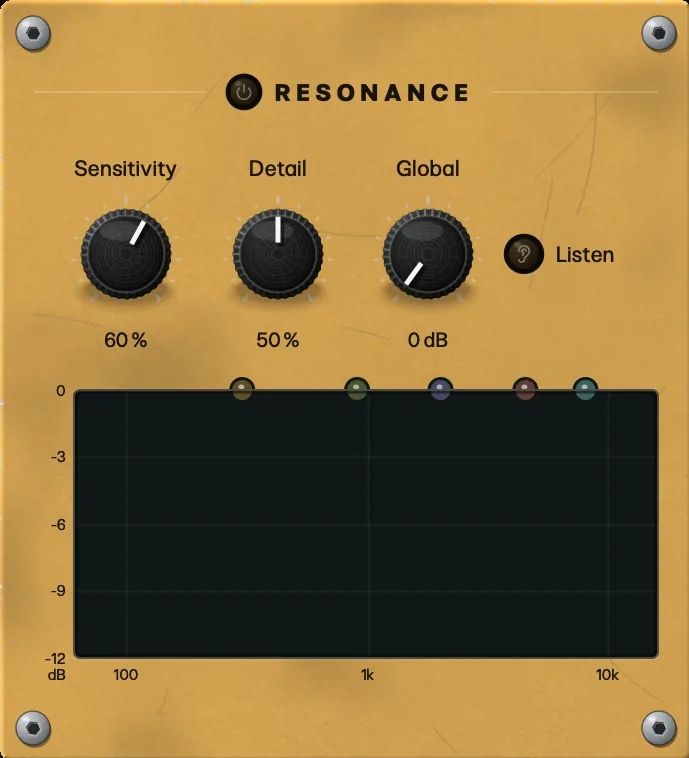
The strip's signature digital tool — a dynamic, program-dependent suppressor that finds and tames moving resonances (acoustic body honk, cab peaks, high-gain whistles, fizz).

  • Amount, Sensitivity, Detail, Range

    Set how much it removes, how eagerly it flags a resonance, and whether it works Smooth (broad tonal smoothing) or Surgical (narrow, targeted notches) across a user-set frequency range.

  • See it and solo it

    A real-time reduction spectrum shows exactly what is being detected and cut, and Listen auditions only the removed signal. Rebuilt to run at zero added latency with a minimum-phase design.

Saturation

Saturation

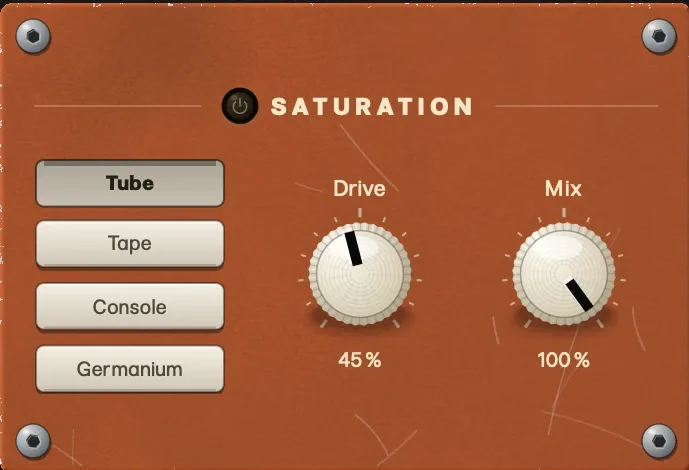
Four harmonic-colour voices at the end of the chain — pick one, set Drive and Mix. Each model keeps its own Drive and Mix.

  • Tube

    Soft, slightly asymmetric saturation with an open, harmonically lively character.

  • Tape

    Rounder saturation with a gentler peak softening that naturally rounds transients and top end as Drive climbs.

  • Console (EMI TG)

    Transformer-forward console colour: a beefy low end with an airy, silky top and 2nd-plus-3rd harmonics — the cleaner, more open of the two new voices.

  • Germanium (Neve 1057)

    Germanium-transistor grit: weighty lows, focused forward mids and a darker top, 2nd-dominant with 3rd rising under drive — the more aggressive, more compressed voice.

Workflow & Routing

Workflow & Routing

Honest gain staging with nothing hidden — you drive the levels, by ear.

  • Trim and metering

    Input Gain with a peak meter, Output Gain with a peak meter and clip indicator. No automatic gain compensation anywhere.

  • Every stage bypassable

    A per-module bypass on every processor plus a Global Bypass, and the EQ/Compressor order swap, all in one flat view.