Channel Strips

Smear Bass Strip

€14.90$16.90£12.90

Inside the strip

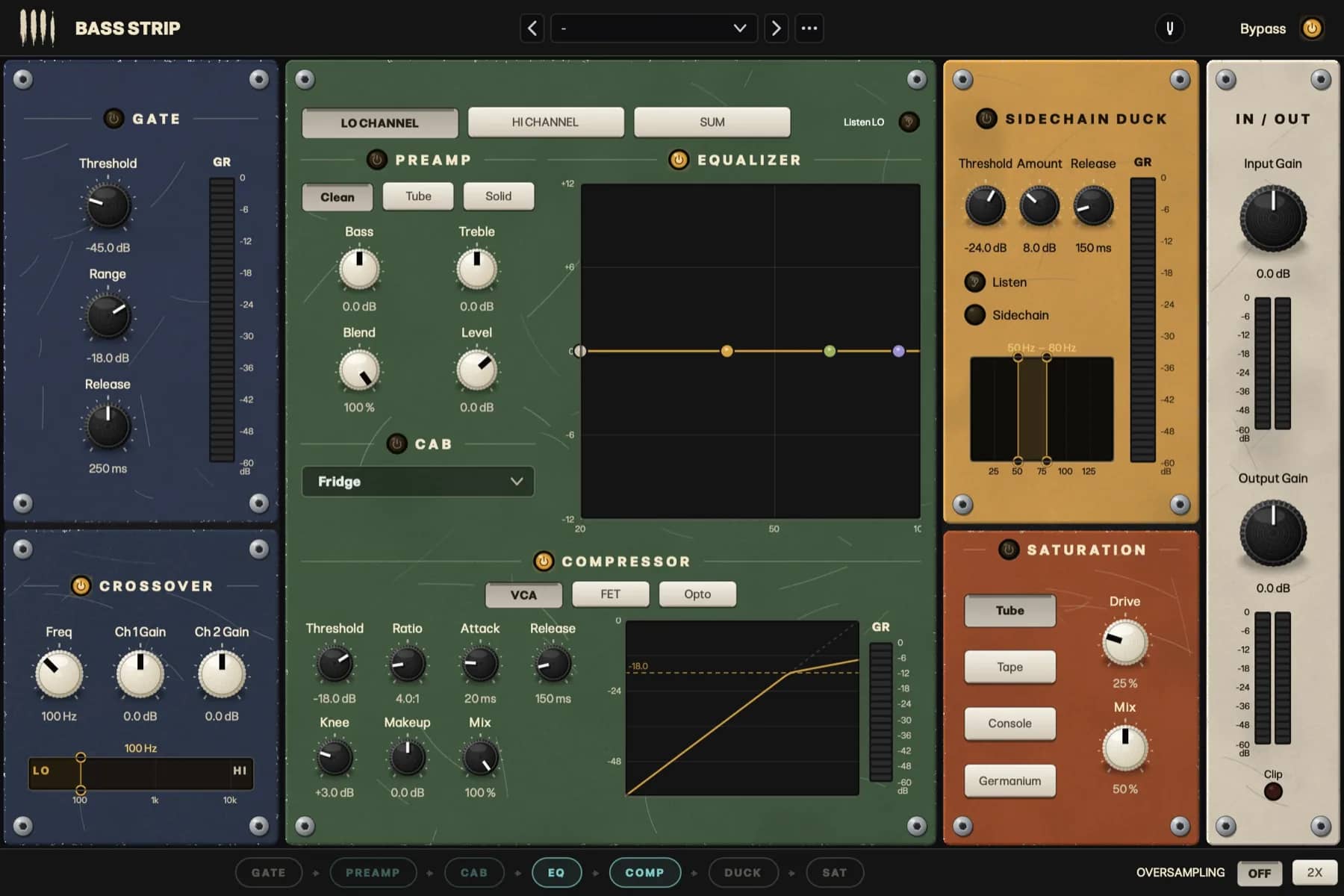
Built for the low end. One view, two bands.

Bass Strip is a DAW channel strip voiced for bass — DI (fingerstyle, pick, slap), post-amp-sim, miked cab and synth bass. Everything sits in one view: no automatic gain compensation, fixed musical routing, and three bass-specific tools built around low-end control: an independent two-band crossover, a per-band preamp slot, and a frequency-limited sidechain ducker.

Gate

Gate

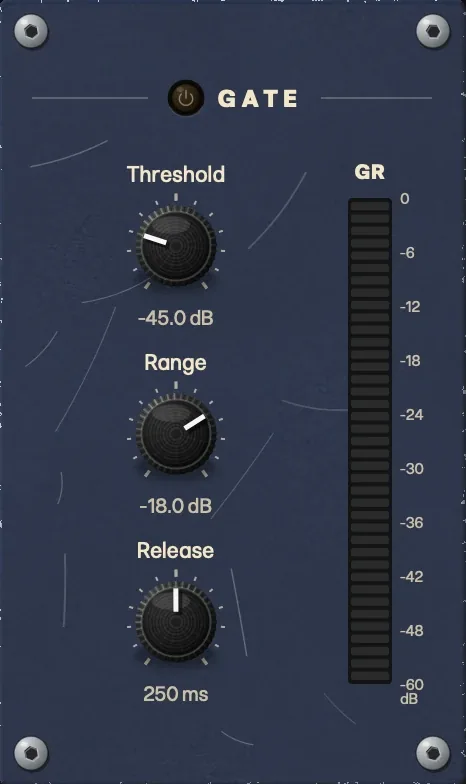
A three-knob bass gate tuned gently so note tails and sustain survive.

  • Threshold, Range, Release

    With a gain-reduction meter and bypass. Range softens the gate into an expander when you only want to trim noise.

  • Bass-safe defaults

    A slower default release and soft transition keep sustained low notes intact instead of chopping the end of the phrase.
Crossover

Crossover

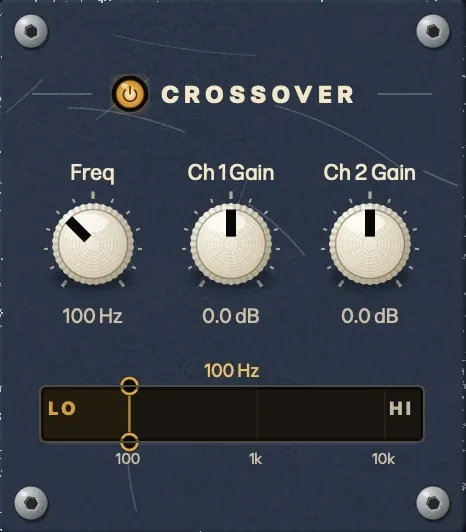
A clean two-band split so lows and highs are processed completely independently.

  • Linkwitz-Riley, zero-latency

    A 24 dB/oct LR4 split with essentially flat magnitude summation and no added latency from the crossover itself.

  • Click-free and optional

    A short crossfade makes toggling and retuning click-free; with Split off the whole signal runs full-band through the LO chain and nothing is lost.

Per-Band Preamp

Per-Band Preamp

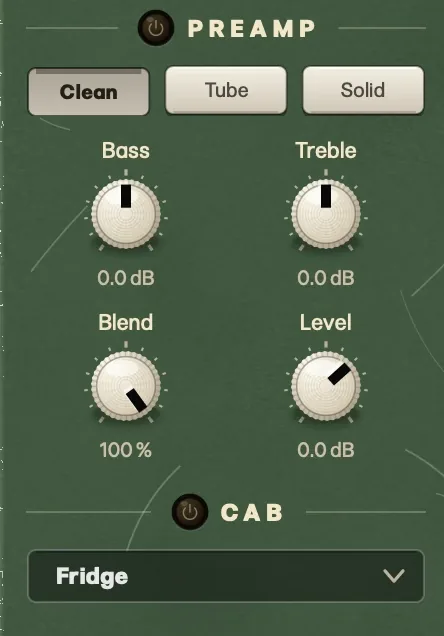
A preamp slot at the front of each band, ready for character models.

  • Clean today

    v1 ships Clean (unity, transparent) on both bands so gain staging is set now and stays compatible.

  • Tube & Solid coming

    The Tube and Solid models appear as visible coming-soon options; the slot and parameter layout are reserved so adding them later changes nothing about your saved state.

Character EQ

Character EQ

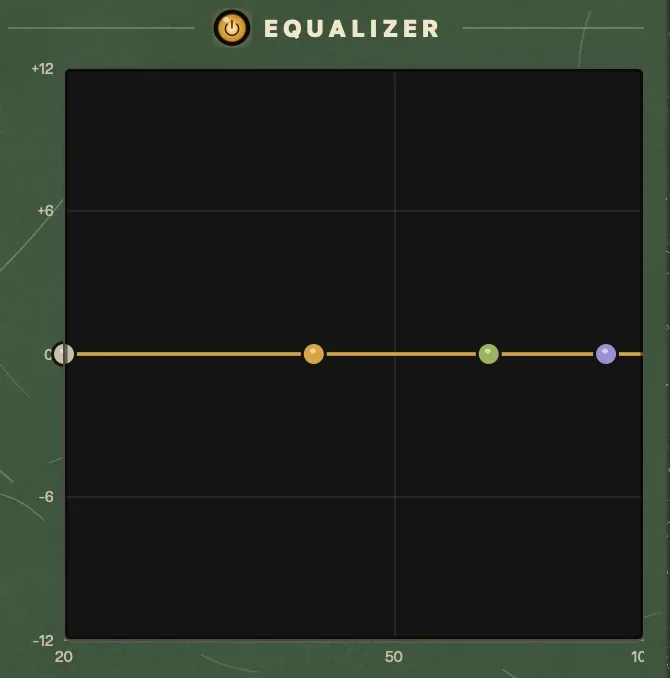
A bass-voiced character EQ for musical, Pultec-flavoured tone-shaping per band.

  • Bass-voiced bands

    HPF, Sub, Body, Mids, Top and LPF, with Pultec-style Boost/Attenuation ends and Broad/Tight bells, all voiced for low-end weight and pick/clank definition.

  • Guided interface

    Soft frequency detents, character tooltips, a non-interactive response curve and a Bass Tone Map Reference (rumble to sub to thump to warmth to string noise).

Compressor

Compressor

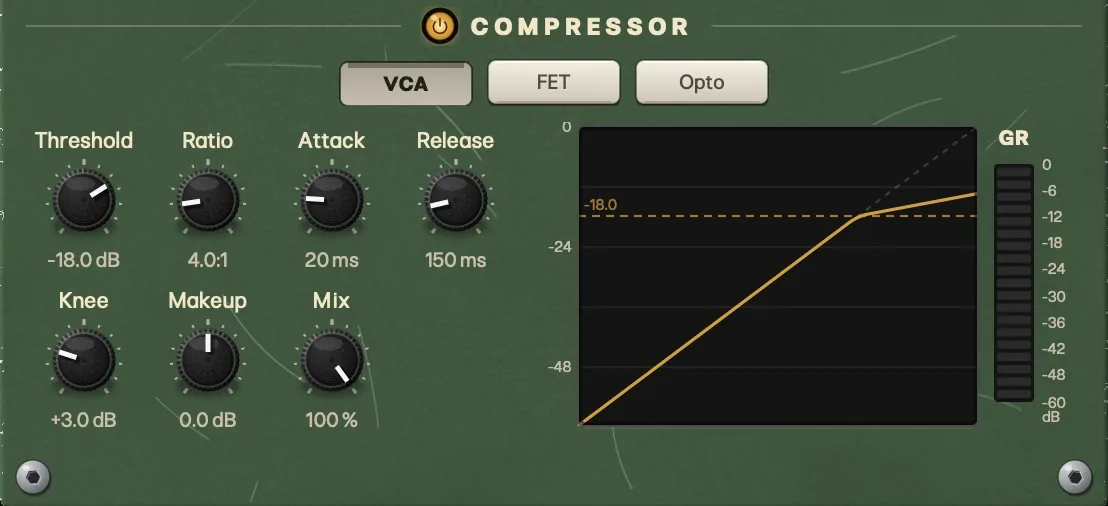
One compressor with three real circuits, applied independently per band.

  • VCA / FET / Opto

    Clean/VCA, FET and Opto, each with its own controls and remembered settings; a Mix control for parallel compression and a gain-reduction meter.

  • Tuned for bass

    A slower default attack on the LO band so the thump is not flattened. No sidechain, no auto-makeup.

Saturation

Saturation

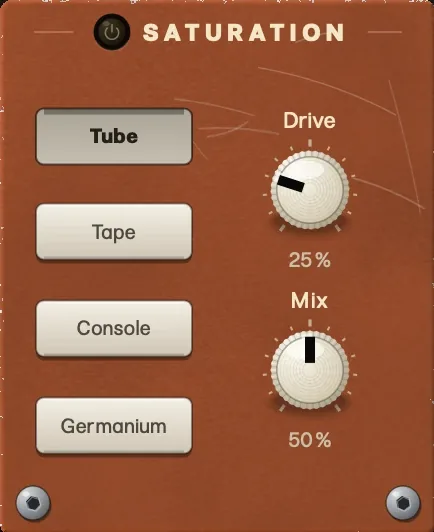
Four harmonic-colour voices on each band, latency-matched so a bypassed band stays sample-aligned. Each model keeps its own Drive and Mix.

  • Tube

    Soft, slightly asymmetric, harmonically open.

  • Tape

    Rounder saturation that gently rounds transients and top end with Drive.

  • Console (EMI TG)

    Transformer-forward console colour: a beefy low end with an airy, silky top and 2nd-plus-3rd harmonics — the cleaner, more open of the two new voices.

  • Germanium (Neve 1057)

    Germanium-transistor grit: weighty lows, focused forward mids and a darker top, 2nd-dominant with 3rd rising under drive — the more aggressive, more compressed voice.

Sidechain Duck

Sidechain Duck

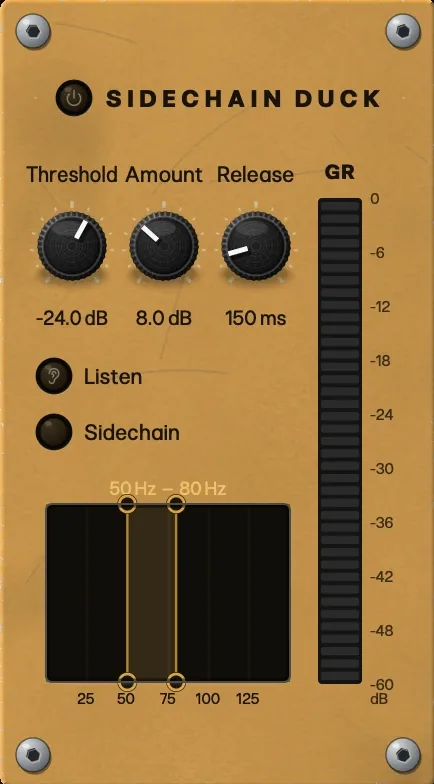
The strip's signature dynamic tool — an external-key ducker that can be limited to a frequency band, so the kick makes room for the bass only where they collide.

  • Band-limited ducking

    Threshold, Amount, Release and a Range (default 50-80 Hz). The key is filtered to the Range before detection, so only in-band kick energy ducks the bass; open the Range fully for a conventional ducker.

  • Clean when idle

    Sits after the band sum so its Amount is independent of compressor settings; Listen auditions the removed content, and with no sidechain connected it is bit-exact passthrough at zero latency.

Workflow & Routing

Workflow & Routing

Everything in one flat view, low-end first.

  • LO/HI tabs, fixed order

    One tab per band, fixed per-band order Preamp to EQ to Comp to Sat; with Split off the HI tab dims.

  • Honest gain staging

    Input/Output gain with peak meters and a clip indicator, per-module bypass plus Global Bypass, and no automatic gain compensation.